Our Blogs
Understanding 3D Rendering for Interior Design Projects
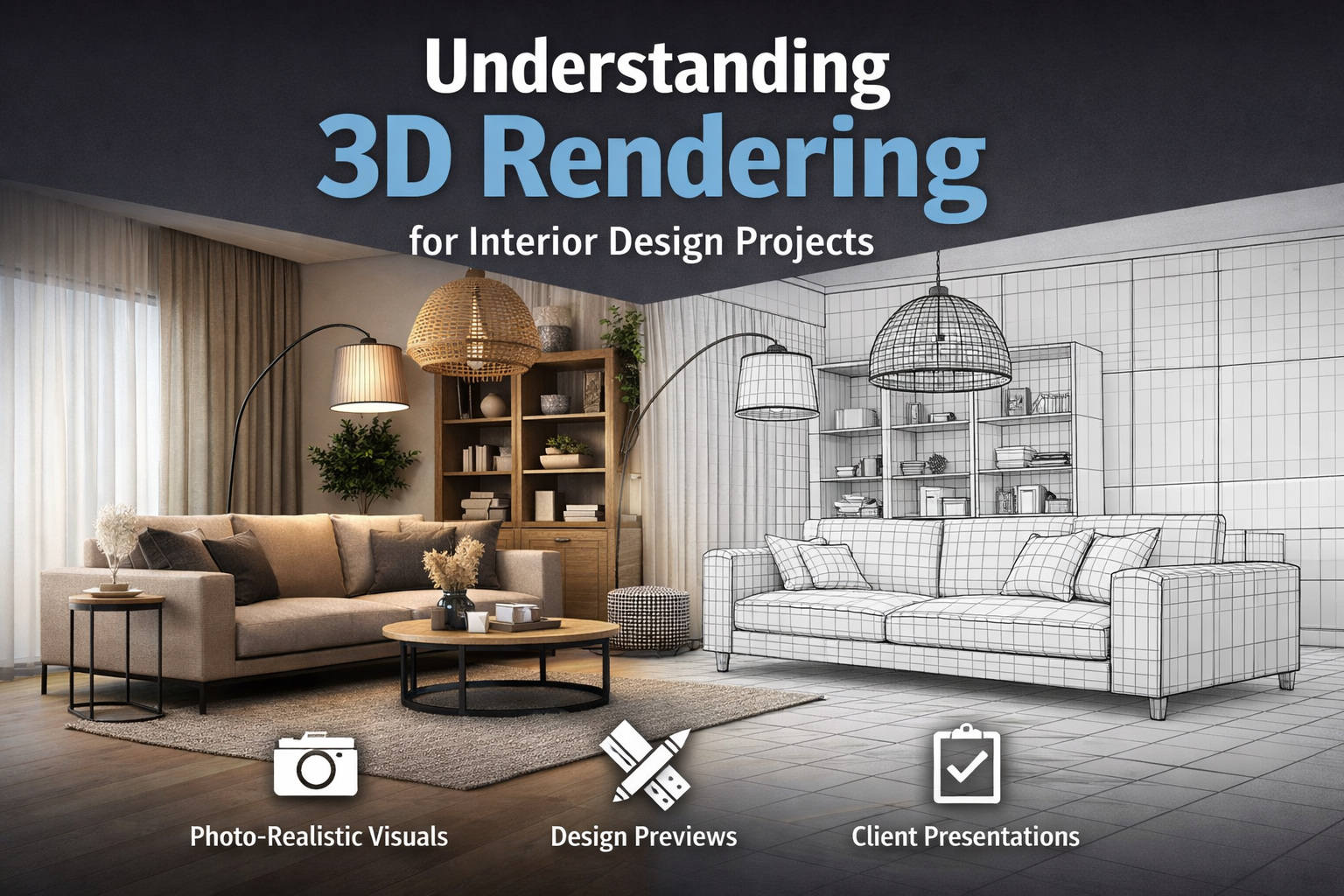
In the contemporary age, 3D rendering for interior design changed the way clients and designers visualize spaces, taking ideas from abstraction to photorealistic rendering that allows you to view every texture, color, and lighting solution before a single piece of lumber is cut. Using first-class rendering software, designers can present accurate depictions of living rooms and workplaces, and any type of interior that gives the client a full visual, aesthetic understanding of the space being designed, before any physical construction begins.
The Advantages of 3D Interior Rendering for Today’s Designers
The pros of 3D interior rendering extend well beyond the visual. 3D interior rendering facilitates communication, increases accuracy, and expedites client approval on almost every aspect of the project. The following are a few obvious benefits of creating 3D interior rendering designs.
- Realistic Visuals: 3D Interior rendering allows the client to see interiors and visualize them as inhabitable spaces with accurately designed materials, textures, and lighting.
- Design Changes: Implementing design changes such as color, décor, and layout is easy to do using rendering technology.
- Client Trust: Creating visually realistic presentations of design with 3D rendering enhances client trust in your process and design decisions.
- Cost-Effective: 3D interior rendering reduces costly errors and subsequent re-work.
- Time Saving: The time available to make decisions and approvals with clients is shortened and efficient in the 3D interior rendering presentation process.
In summary, these advantages and others work together to allow designers to return the best designs to their clients that allow for efficient, high-quality and cost-effective, seamless experiences that may achieve design aspirations and practical needs.
How 3D Visualization for Interior Designers Enhances Communication
Using 3D visualization for interior designers bridges the gap between imagination and reality. It helps clients visualize concepts without needing technical drawings or blueprints. By showing realistic digital renderings, designers ensure their clients understand furniture placement, lighting behavior, and space utilization effortlessly.
The Role of Realistic Interior Rendering in Decision-Making
Realistic interior rendering gives clients a true sense of how a finished space will look and feel. High-definition visuals enable better color selection, furniture placement, and lighting adjustments. As a result, both designers and clients can make faster, more confident design decisions.
Saving Time and Resources Through 3D Rendering
3D rendering significantly reduces trial-and-error in interior design. By creating detailed models early, designers can predict material requirements, cost estimates, and construction challenges. This minimizes resource wastage and ensures smoother project execution from concept to completion.
Bringing Customization to Life in Interior Projects
One of the most exciting features of 3D rendering is its ability to support personalization. Designers can instantly swap wall colors, furniture, or flooring styles within the same model, helping clients compare multiple versions of a space effortlessly. This flexibility makes customization both visual and practical.
Real-World Impact of 3D Rendering in Interior Design
Modern interior firms use 3D rendering not only for visualization but also for marketing, presentations, and virtual tours. Let’s explore its real-world applications:
| Application | Description | Outcome |
| Virtual Reality Walkthroughs | Immersive 3D tours for clients to explore interiors in real-time | Boosts engagement and client satisfaction |
| Marketing Presentations | Photorealistic visuals used in digital campaigns and portfolios | Enhances brand image and attracts new clients |
| Construction Coordination | Helps contractors visualize complex details accurately | Ensures precision and reduces on-site errors |
These real-world applications make 3D rendering an indispensable tool in every phase of the design process.
The Future of Interior Design with 3D Visualization
As technology evolves, 3D rendering for interior design continues to advance with AI-powered tools, real-time rendering, and VR integration. These innovations are transforming how interior designers plan, present, and execute projects with unmatched realism and efficiency.
Client Satisfaction Through Photorealistic Detail
High-quality renders mimic real-world lighting, reflections, and textures so accurately that clients can emotionally connect with the space. This realism fosters greater trust and satisfaction, making approval and investment decisions smoother.
Collaboration Between Designers and Stakeholders
3D rendering encourages collaboration among architects, engineers, and clients. Since all parties visualize the same digital model, communication becomes seamless and errors are reduced. Everyone can provide feedback early, saving time and ensuring design harmony.
Transforming Conceptual Ideas into Tangible Reality
In traditional design, clients often struggled to interpret 2D plans. With 3D rendering, concepts are brought to life with realistic perspectives and depth, helping turn creative ideas into tangible, buildable spaces without ambiguity.
Conclusion
3D rendering has completely transformed the interior design landscape by merging creativity with technology. From enhancing visualization to improving client communication and decision-making, its impact is undeniable. As 3D visualization for interior designers continues to evolve, it promises an even more efficient, immersive, and innovative future for design professionals worldwide.
FAQs
What is 3D rendering in interior design?
3D rendering in interior design is the process of creating lifelike digital images or animations of proposed interiors, showcasing layouts, materials, and lighting before actual implementation.
How does 3D rendering benefit interior designers?
It allows designers to visualize concepts clearly, test multiple designs, reduce revisions, and communicate ideas effectively to clients and contractors.
Is 3D rendering cost-effective for interior projects?
Yes, it minimizes costly redesigns by identifying layout or aesthetic issues early, saving both time and resources during the project.
Can 3D rendering show real lighting and textures?
Absolutely. Advanced rendering software accurately replicates real-world lighting, shadows, and material textures to create authentic interior visuals.
How does 3D visualization improve client satisfaction?
By offering immersive, realistic previews, clients can visualize and modify their spaces confidently, leading to faster approvals and happier outcomes.
