Our Blogs
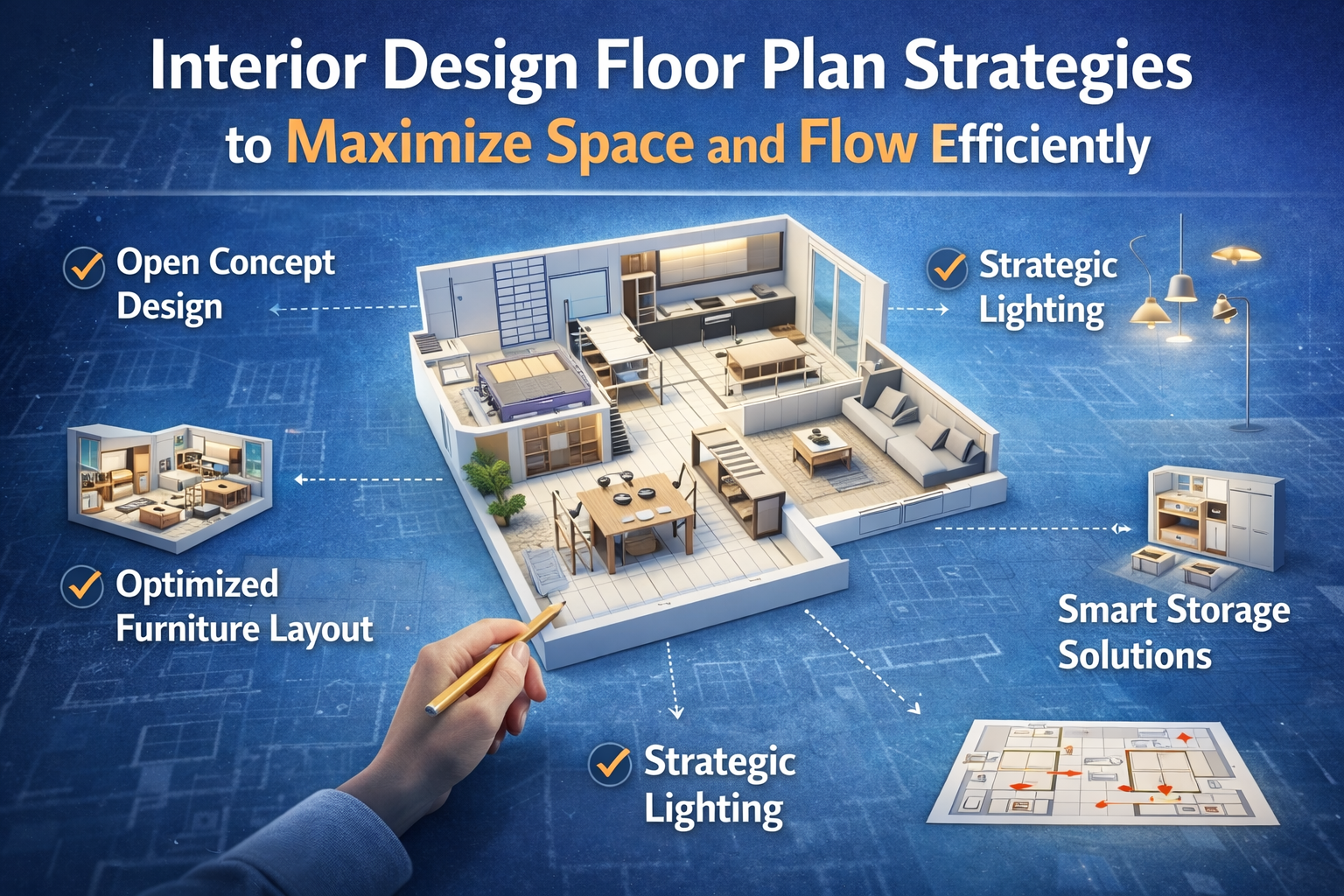
Interior Design Floor Plan Strategies to Maximize Space
When creating a balanced, functional atmosphere, well-designed interior spaces follow a structured plan. Creating good floor plans for residential or commercial interiors, using intelligent layouts helps improve space usage for human traffic, maximizes usability and creates a harmonious visual flow throughout the space. Designers can create open, functional and aesthetically balanced homes and/or businesses using basic interior design floor plan tips along with modern Floor Plan Visualization layouts without increasing the living/working area.
Interior Design Floor Plan Tips for Open and Flexible Layouts
Open layouts are a key element of modern interior design floor plans. They reduce visual barriers, allow natural light to travel freely, and improve spatial flow. Smart zoning techniques help maintain functionality while preserving openness and flexibility.
Open Living and Dining Integration
Combining living and dining areas creates a seamless transition between spaces. This approach enhances movement, makes small homes feel larger, and supports modern lifestyles where social interaction and flexibility are priorities.
Use of Visual Zoning Techniques
Area rugs, ceiling variations, and lighting zones help define functional areas without walls. Visual zoning ensures openness while maintaining purpose, improving both space utilization and design clarity.
Benefits of Open Layouts
- Improved natural light distribution
- Enhanced movement and circulation
- Flexible furniture arrangements
Modern Floor Plan Layouts for Small and Compact Spaces
Modern floor plan layouts focus on efficiency, especially for apartments and compact homes. Intelligent space planning allows designers to maximize storage, reduce clutter, and maintain comfort while using minimal square footage.
Multipurpose Room Planning
Multipurpose rooms combine functions such as work, relaxation, and storage. Foldable furniture and movable partitions allow spaces to adapt easily to different needs throughout the day.
Built-In Storage Integration
Built-in storage solutions reduce the need for bulky furniture. Wall-mounted cabinets, under-bed storage, and concealed shelves keep interiors clean while preserving valuable floor space.
Smart Space-Saving Solutions
- Wall-mounted furniture
- Foldable tables and beds
- Vertical storage designs
Interior Design Floor Plan Ideas for Smooth Circulation
Smooth circulation is essential for functional interior design floor plans. Clear pathways reduce congestion, improve comfort, and ensure a natural flow between rooms without unnecessary interruptions.
Clear Pathway Planning
Designing direct and unobstructed walkways helps occupants move comfortably between spaces. Avoid placing large furniture in circulation zones to maintain balance and accessibility.
Logical Room Adjacency
Placing related spaces close together enhances usability. For example, kitchens near dining areas or bedrooms near bathrooms improve daily functionality and reduce unnecessary movement.
Ideal Circulation Guidelines
|
Area Type |
Recommended Clearance |
|
Hallways |
900–1200 mm |
|
Living Areas |
750–900 mm |
| Kitchen Work Zones |
1000–1200 mm |
Interior Design Floor Plan Tips for Natural Light and Ventilation
Lighting and ventilation play a major role in interior comfort. A well-designed interior design floor plan allows sunlight and air to flow freely, creating healthier and more inviting spaces.
Strategic Window Placement
Placing windows along shared spaces like living rooms and kitchens improves brightness and energy efficiency. Proper orientation enhances daylight without excessive heat gain.
Cross-Ventilation Design
Cross-ventilation improves indoor air quality by allowing fresh air to circulate. Aligning openings on opposite walls helps maintain thermal comfort naturally.
Lighting and Ventilation Advantages
- Reduced energy consumption
- Healthier indoor environment
- Enhanced visual openness
Modern Floor Plan Layouts for Functional Zoning
Functional zoning divides a space into public, private, and service areas. This concept is essential in modern floor plan layouts to maintain privacy, efficiency, and organized movement.
Public and Private Space Separation
Separating social areas from private rooms enhances comfort. Living rooms and kitchens remain accessible, while bedrooms and study areas stay quiet and secluded.
Service Area Optimization
Placing utility areas such as laundry, storage, and bathrooms strategically reduces clutter and improves daily workflow without interrupting main living spaces.
FAQs
Q1. What is the most important factor in an interior design floor plan?
The most important factor is efficient space utilization combined with smooth circulation, ensuring comfort, functionality, and visual balance.
Q2. How do modern floor plan layouts improve small homes?
They use open layouts, multipurpose spaces, and smart storage solutions to make small homes feel larger and more functional.
Q3. Why is circulation important in interior design floor plans?
Good circulation improves movement, reduces congestion, and enhances the overall usability of a space.
Q4. How can natural light be maximized through floor planning?
Strategic window placement, open layouts, and minimal partitions help distribute natural light effectively.
Q5. Are open floor plans suitable for all interiors?
Open plans work best for social and compact spaces, but proper zoning is necessary to maintain privacy and functionality.
