Our Blogs
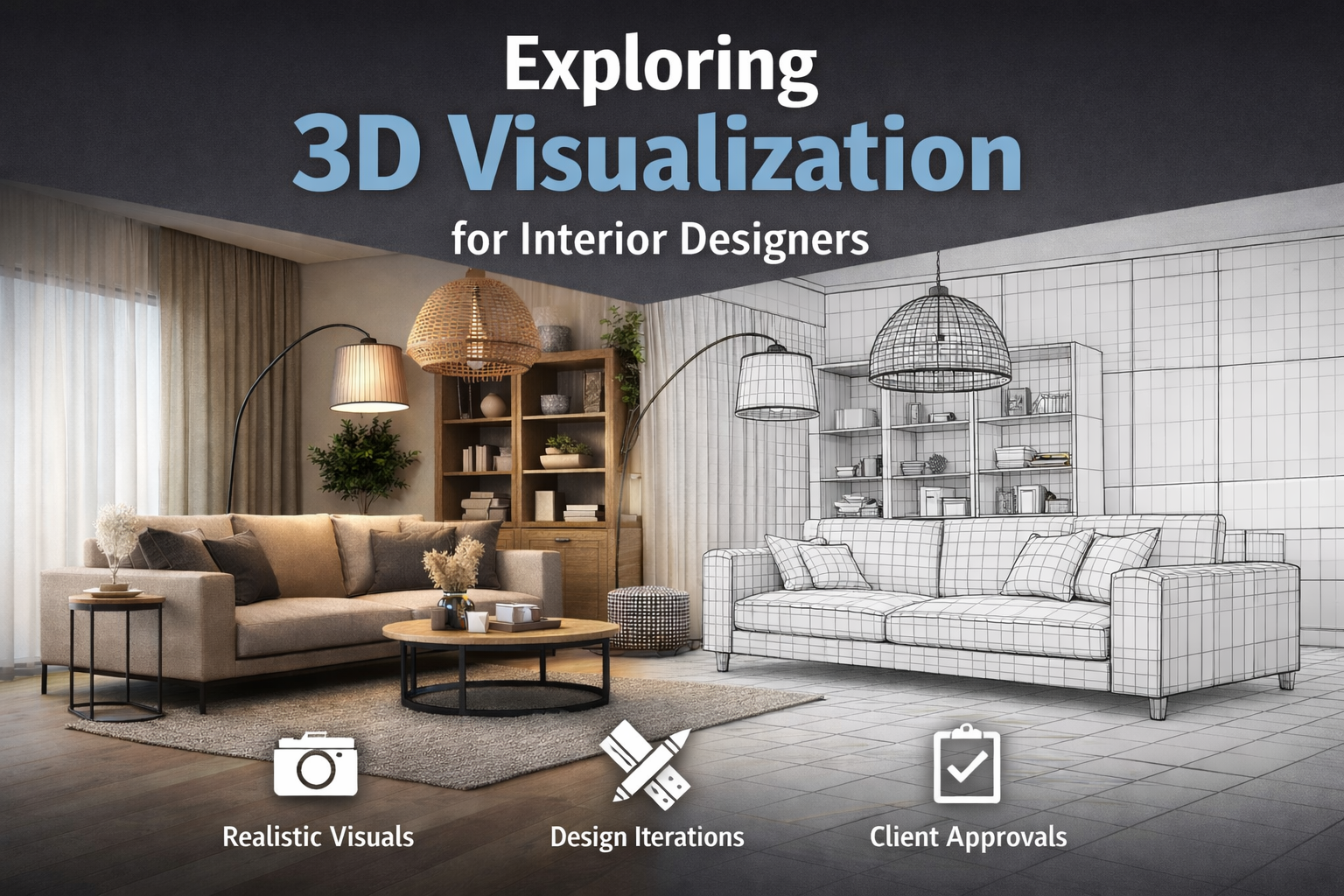
Exploring 3D Visualization for Interior Designers
The impact of 3D visualization for interior designers has significantly changed the way we think about, share, and explore spaces that we design. Where it used to be to take photos or make sketches or mood boards for our clients, designers are able to create 3D interior renders that have photorealism to capture lighting, materials, and the flow of space in a detailed way. The idea behind a virtual tool is to bridge the gap between creative thought and execution, helping clients visualize the end result before construction begins. Let’s discuss the way that virtual interior design visualization changes the design process from concept to fruition.
Virtual Interior Design Visualization – A Contemporary Design Phenomenon
Virtual interior design visualization is the ability of designers to create immersive digital environments that give the impression of real spaces. It helps clients “walk through” a proposal and experience textures, shading and decor in an interactive 3D package, allowing them to experience the design in a way impossible for a physical or flat design document.
- Helps Clients Visualize Finished Interiors Before Construction
- Reduces Design Revisions and miscommunication
- Allowing virtual walkthroughs and more interactive presentations
Turning Ideas into Interactive Models
With virtual interior design visualization, concepts now go beyond sketching and flat experiences. Designers can create 3D digital environments so that owners and clients can explore every aspect of the proposed design.
Enhancing Collaboration with Clients
3D models make it easier to communicate design intent. Clients can provide feedback instantly, allowing designers to refine layouts, colors, and furnishings in real time.
Photorealistic 3D Interior Renders Bringing Concepts to Life
Photorealistic 3D interior renders combine design expertise and advanced rendering software to produce lifelike visualizations. These high-quality images showcase materials, lighting, and decor elements exactly as they would appear in the completed space.
- Accurately displays furniture, lighting, and texture finishes
- Provides marketing visuals for portfolios or presentations
- Helps clients emotionally connect with design outcomes
Lighting and Shadow Realism
By simulating natural and artificial lighting conditions, 3D renders show how spaces will look throughout the day, ensuring perfect ambiance and illumination balance.
Material and Texture Detailing
Designers use realistic rendering to test combinations of fabrics, paints, and surfaces before actual selection, minimizing waste and rework.
The Interior Design Visualization Process Explained
The interior design visualization process involves several stages from concept sketches to finalized 3D renders. Each step ensures accuracy, client involvement, and creative control over design outcomes.
- Concept development and 2D floor planning
- 3D modeling of interiors and furnishings
- Rendering, lighting, and post-production enhancement
Step 1 – Concept and Space Planning
Designers begin with mood boards and 2D layouts that define style, function, and space utilization. These sketches form the base for 3D modeling.
Step 2 – Building the 3D Model
Using tools like SketchUp, 3ds Max, or Blender, designers create a digital model representing furniture, decor, and architectural elements with realistic proportions.
Step 3 – Lighting, Texturing, and Rendering
Once the 3D model is complete, designers apply textures and lighting effects to create realistic visuals. This step gives the render its lifelike appearance.
Step 4 – Review and Client Presentation
After rendering, the visuals are refined based on client feedback. Final renders are used in presentations, portfolios, or virtual walkthroughs.
Why 3D Visualization Is Essential for Interior Designers
3D visualization empowers interior designers to convey ideas more convincingly, reduce project risks, and ensure client satisfaction. It has become a crucial part of modern design workflows, merging creativity with precision.
- Saves time and resources during planning
- Enhances presentation quality and professionalism
- Enables data-driven design decisions
Reducing Costly Errors and Revisions
By visualizing designs in advance, potential layout or color mismatches are caught early, saving both time and money during project execution.
Boosting Marketing and Client Engagement
High-quality 3D renders are perfect for portfolios, websites, and social media — attracting clients through visually compelling design storytelling.
The Future of 3D Visualization for Interior Design
The integration of AI, VR, and AR technologies is taking 3D visualization for interior designers to new heights. Clients can now explore virtual rooms in real time, adjusting decor or layouts through immersive tools.
- VR walkthroughs for full-room immersion
- AI-assisted rendering for faster visualization
- AR previews for real-time furniture placement
Virtual Reality Walkthroughs
With VR technology, clients can navigate through 3D interiors, experiencing spatial depth and ambiance as if they were physically inside the designed space.
Augmented Reality Previews
AR applications allow designers to project 3D models into environments, helping clients visualize furniture or color schemes within their actual rooms.
Conclusion
3D visualization for interior designers is more than just a creative tool, it’s a transformative technology that enhances communication, precision, and client satisfaction. From virtual interior design visualization to photorealistic 3D interior renders, this technology helps professionals bring imagination to life, making the design process more collaborative, efficient, and visually inspiring.
FAQs
- What is 3D visualization in interior design?
3D visualization is a digital method in which designers develop images or animations that illustrate realistic proposed spaces in a way that empowers clients to see what the eventual design will look like prior to breaking ground.
- How does virtual interior design visualization assist my clients?
Virtual interior design visualization allows my clients to “see” and investigate space in it 3D capacity, giving them a better understanding of what the designer is proposing, and allowing them to make more informed decisions prior to engaging the finishes and the implementation process.
- What software or tools of trade can interior designers utilize for 3D rendering?
Interior designers can often utilize software, such as SketchUp, Blender, 3ds Max, V-Ray, and Lumion, allowing designers to produce detailed and photorealistic interior renderings.
- What does it take to create a 3D interior render? How much time does it take?
The time it takes to create a 3D rendering often will depend on how complex the project is; a simple room and the rendering process may take several hours, while a detailed and photorealistic scene may take several days.
- Can 3D renders be used for marketing and presentations?
Absolutely, 3D renders can offer an enhanced and aesthetic appeal in client presentations, design proposals, and portfolio marketing.
