Our Blogs
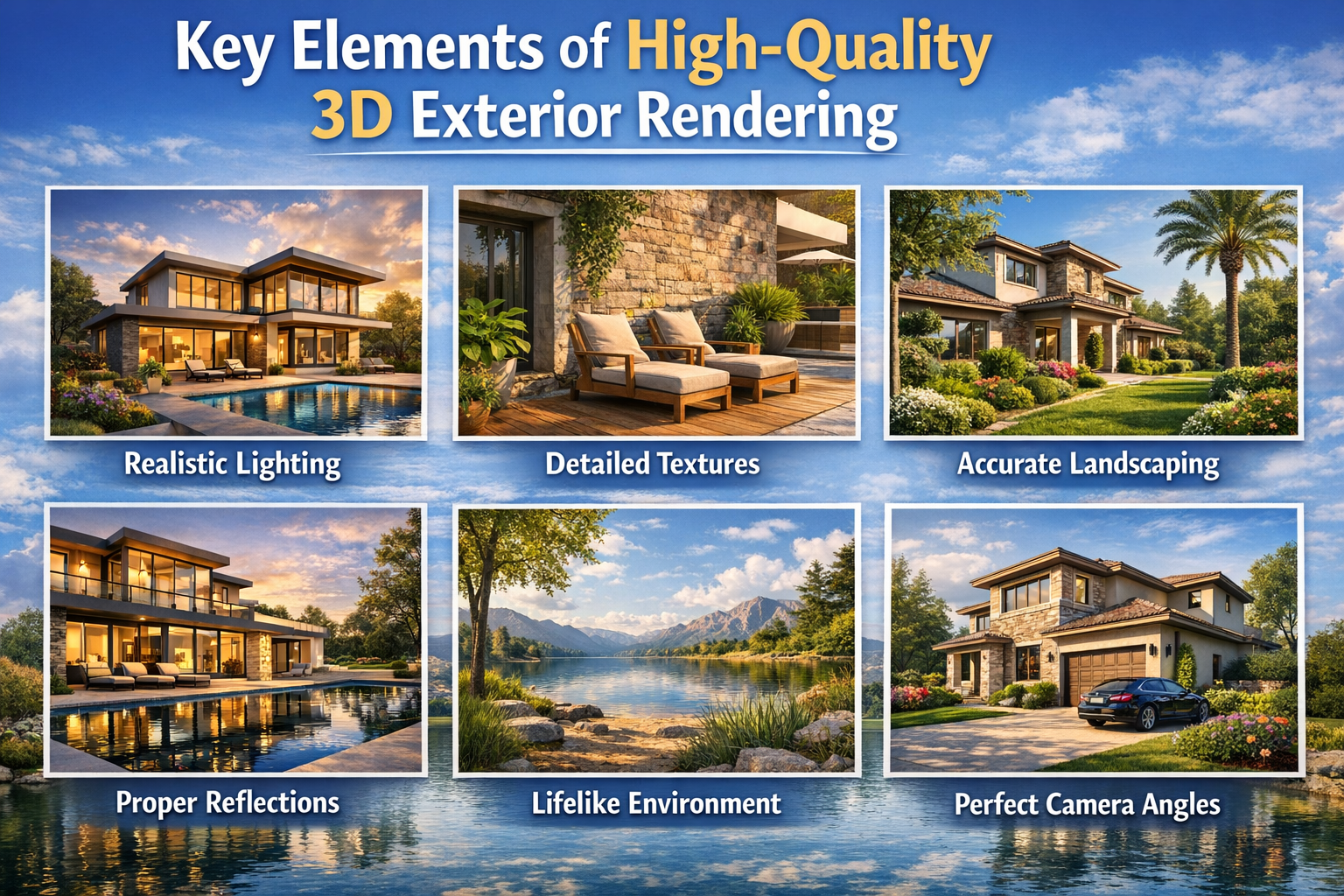
Key Elements of High-Quality 3D Exterior Rendering
Quality 3D exterior renderings offer realism, detail, and design accuracy to represent architectural projects in a variety. Every aspect of the visual contributes to the overall effect and how well the display comes together, including the lighting and materials, as well as landscaping and context. Using advanced rendering tools and techniques, architects, developers, and designers can produce exterior renderings that will allow their clients to see the intention clearly. The combination of creativity and technical accuracy is what makes this service successful in a modern design practice.
Realistic architectural renderings help to enhance attractiveness in the visual representation. 3D Exterior Rendering
- Realistic representations demonstrate accurate components that create a natural sense of realism, including shadows, reflections, and environmental lighting.
- Realistic materials used in the representation, including stone, glass, wood, and metal, provide richness and authenticity.
- Weather variables, landscape elements, and human scale contribute to an emotional relationship with the representation.
Realistic architectural renderings strive to replicate the real-world conditions as accurately as possible. By balancing the lighting, shadows, and textures accurately, the designer creates exteriors that tend to “feel” natural. This level of detail enables viewers to form an emotional connection with the space. It is much easier for the viewer to see the intended purpose of the design.
Advanced 3D Rendering Techniques for Exteriors Improve Quality
|
Technique |
Purpose |
Impact |
| HDRI Lighting | Adds dynamic natural light | Creates consistent, realistic ambiance |
| PBR Materials | Accurate material behavior | Enhances texture realism and depth |
| Global Illumination | Simulates bounced light | Adds vibrancy and reduces flatness |
Advanced 3D rendering techniques for exteriors, such as HDRI lighting, PBR materials, and global illumination, bring unmatched depth and vibrancy to architectural visuals. These methods ensure that renderings look polished, immersive, and technically strong, making the designs feel more professional and lifelike.
Photorealistic Architecture Visualization Improves Client Understanding
- Clear depiction of design intent and spatial proportions.
- Emotional storytelling through mood lighting and context..
Photorealistic architecture visualization plays a crucial role in project presentations. It shows clients exactly how the exterior will look once built, reducing confusion and improving decision-making. When light, shadow, mood, and context are harmonized, clients gain full confidence in the proposed design.
Exterior Design Rendering Standards Ensure Professional Accuracy
- Consistent scale, angles, and camera perspectives.
- Correct environmental placement and shadows.
- Realistic material mapping and proper geometry modeling.
Exterior design rendering standards help maintain consistency and accuracy in every architectural project. By following professional guidelines such as correct scale, viewpoint, and lighting, render artists ensure that the final visuals represent the planned structure with precision. These standards are essential for delivering reliable and high-quality exterior renderings.
5. Integration of Landscape and Surroundings Adds Contextual Realism
- Natural elements like trees, grass, and water bodies enrich visual appeal.
- Urban context, such as roads, pathways, and neighboring buildings, improves accuracy.
- Human figures and vehicles give scale and liveliness.
A high-quality 3D exterior rendering becomes more convincing when surrounded by realistic landscaping and contextual elements.
Importance of Lighting in 3D Exterior Rendering
Lighting sets the mood and defines how the building appears in the scene. Natural sunlight, golden-hour effects, and soft ambient lighting can completely transform the rendering’s realism. Precise lighting placement helps highlight architectural features and ensures the design looks visually striking.
Role of Material Accuracy and Texture Detailing
Accurate textures like wood grains, concrete patterns, or reflective glass bring exteriors to life. When materials are applied properly with high-resolution maps, they add physical depth and realism. This ensures that the rendering closely matches the final built structure.
Photographic Composition for Professional Rendering Output
A visually appealing 3D exterior rendering depends heavily on composition. Using balanced perspectives, foreground elements, and professional framing techniques, artists create images that feel cinematic and engaging. Good composition ensures viewers immediately connect with the architecture.
Weather Conditions and Time-of-Day Effects
Adding weather effects like cloudy skies, warm sunset glows, or crisp morning light increases the emotional appeal of renderings. Time-of-day settings also influence shadows and reflections, helping architects showcase their project in the most flattering and realistic way.
FAQs
- What makes for a high-quality 3D exterior rendering?
A quality rendering has accurate lighting, realistic materials, detailed texturing, landscaping, and is composed professionally. These things help bring architectural designs to life.
- Why does realism matter in architectural renderings?
Typically, the more realistic the rendering is, the easier it is for a client/recipient to picture how the building will exist in real life. Realistic renderings tend to aid in improved decision-making while developing client trust in the design.
- How do landscaping and surroundings affect exterior renderings?
Landscaping offers the natural context and emotional context that make renderings more narratively relatable and aesthetically appealing.
- What are the standards in exterior design rendering?
The standards we refer to ensure accuracy, consistency and professional quality of exterior design rendering for all architectural visualization projects.
