Our Blogs
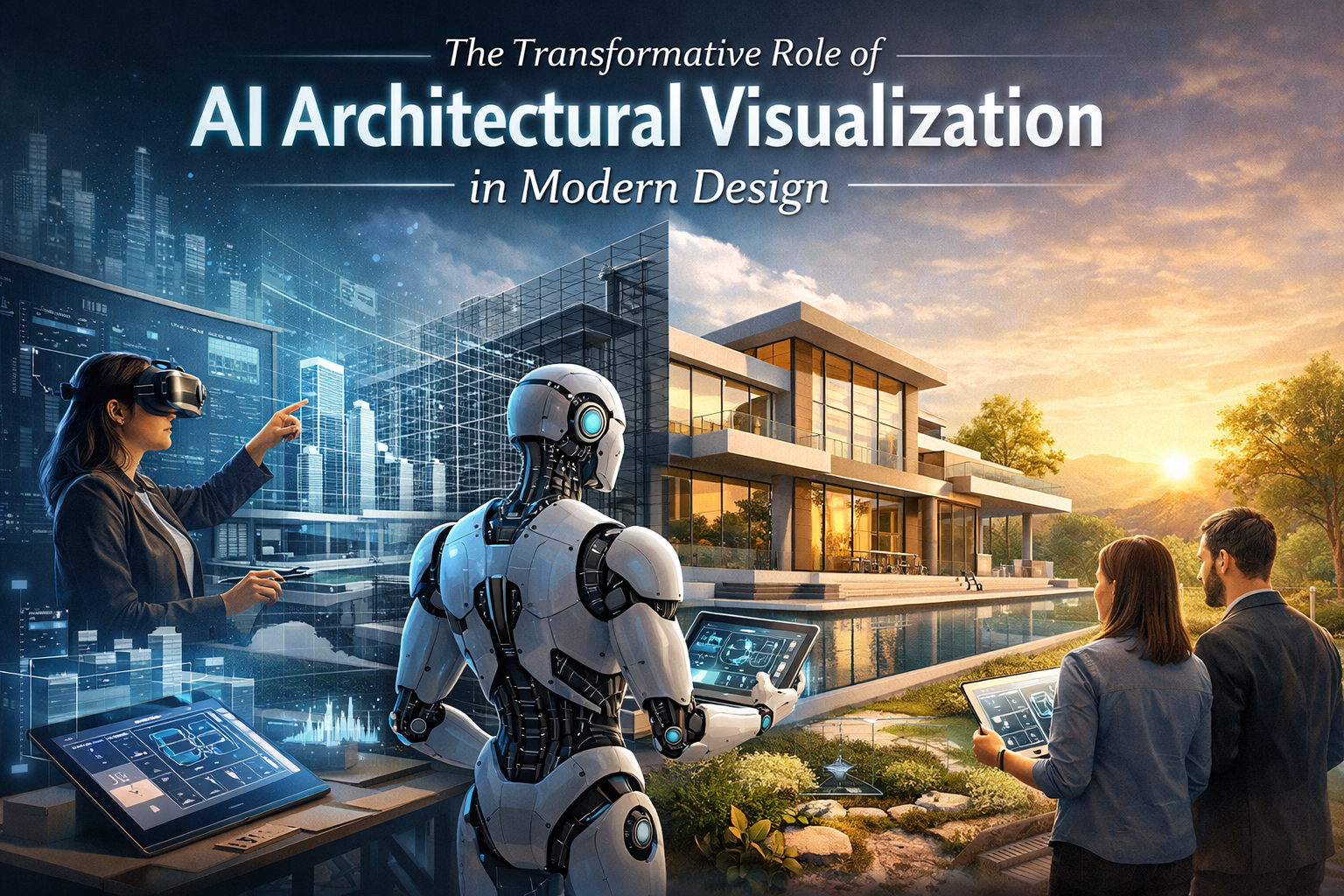
The Transformative Role of AI Architectural Visualization in Modern Design
AI architectural visualization is changing the way architects and designers think about their projects, present them, and change them. AI enhances visualization workflows through automation, predictive modeling, and intelligent 3D rendering; it not only accelerates workflows but also increases accuracy. Paired with real-time rendering in architecture, it allows immersive, interactive experiences complete with instant feedback and collaboration for design changes. This potent combination creates faster turnaround times and enhances creativity, while also providing realistic 3D renderings for powerful storytelling and communication while designing architectural projects in 2025 and beyond.
Impact of Real-Time Rendering in Architecture
- Provides instant visualization updates with every modification.
- Creates immersive walkthroughs in an integrated VR/AR setting.
- Improves decision-making with real-time changes to lighting, texture, and shadows.
Real-time rendering in architecture provides instant visualization where architects can visualize or see the design in real or display time. Designers can leverage real-time components while editing materials simultaneously, where the versions give the impression of quick development and responsive presentations, providing a realistic presentation of a client and design experience. Real-time rendering technology connects design concepts and construction in a way that fosters clarity that previously didn’t exist.
Integrating AI in 3D Rendering for Smarter Design Workflows
- Automates lighting, material, and environment adjustments.
- Uses machine learning to predict design outcomes.
- Reduces manual modeling efforts with generative design tools.
AI in 3D rendering introduces automation and predictive capabilities to architectural visualization . By learning from vast datasets, AI tools can automatically enhance render quality and suggest optimized layouts. This saves designers time while ensuring high precision, consistency, and creative freedom across large-scale architectural projects.
Architectural Visualization Trends 2025 Shaped by AI
- Rise of generative AI for automated design creation.
- Increased use of VR/AR in design presentations.
- Photorealistic rendering through AI-powered upscaling and lighting simulations.
Architectural visualization trends in 2025 revolve around intelligent automation and immersive experiences. AI now assists in creating dynamic environments and realistic renderings with minimal manual input. Architects can preview full designs in VR before breaking ground, ensuring better collaboration, fewer revisions, and data-backed design precision.
AI Design Tools for Architects Revolutionizing Visualization
| AI Tool | Function | Benefit |
| Midjourney | Concept generation | Quick ideation and mood exploration |
| Autodesk Forma | Predictive environmental analysis | Data-driven urban planning |
| Enscape | Real-time visualization | Instant feedback during design |
AI design tools for architects streamline visualization by integrating intelligence into every design phase. From concept ideation to real-time rendering, these tools enhance accuracy and communication. By adopting platforms like Enscape and Forma, architects gain efficiency, visual depth, and smarter design iterations in less time.
1. Enhancing Collaboration and Client Communication
AI architectural visualization allows architects to present interactive 3D environments that clients can explore in real time. This boosts understanding, engagement, and collaboration, enabling clients to make confident decisions earlier in the design process.
2. Reducing Human Error and Design Revisions
By automating repetitive tasks like lighting calibration or texture mapping, AI minimizes manual errors. Machine learning algorithms also predict potential design conflicts, helping architects correct flaws before construction begins.
3. Accelerating Concept-to-Render Timelines
AI-driven rendering engines can produce photorealistic visuals in minutes instead of hours. This acceleration lets architects iterate on designs quickly, reducing production bottlenecks and keeping projects on schedule.
4. Sustainability and Energy Optimization
AI tools analyze environmental data to optimize building orientation, materials, and energy performance. This helps architects design sustainable, efficient spaces aligned with green building standards and smart city goals.
Frequently Asked Questions
