Our Blogs
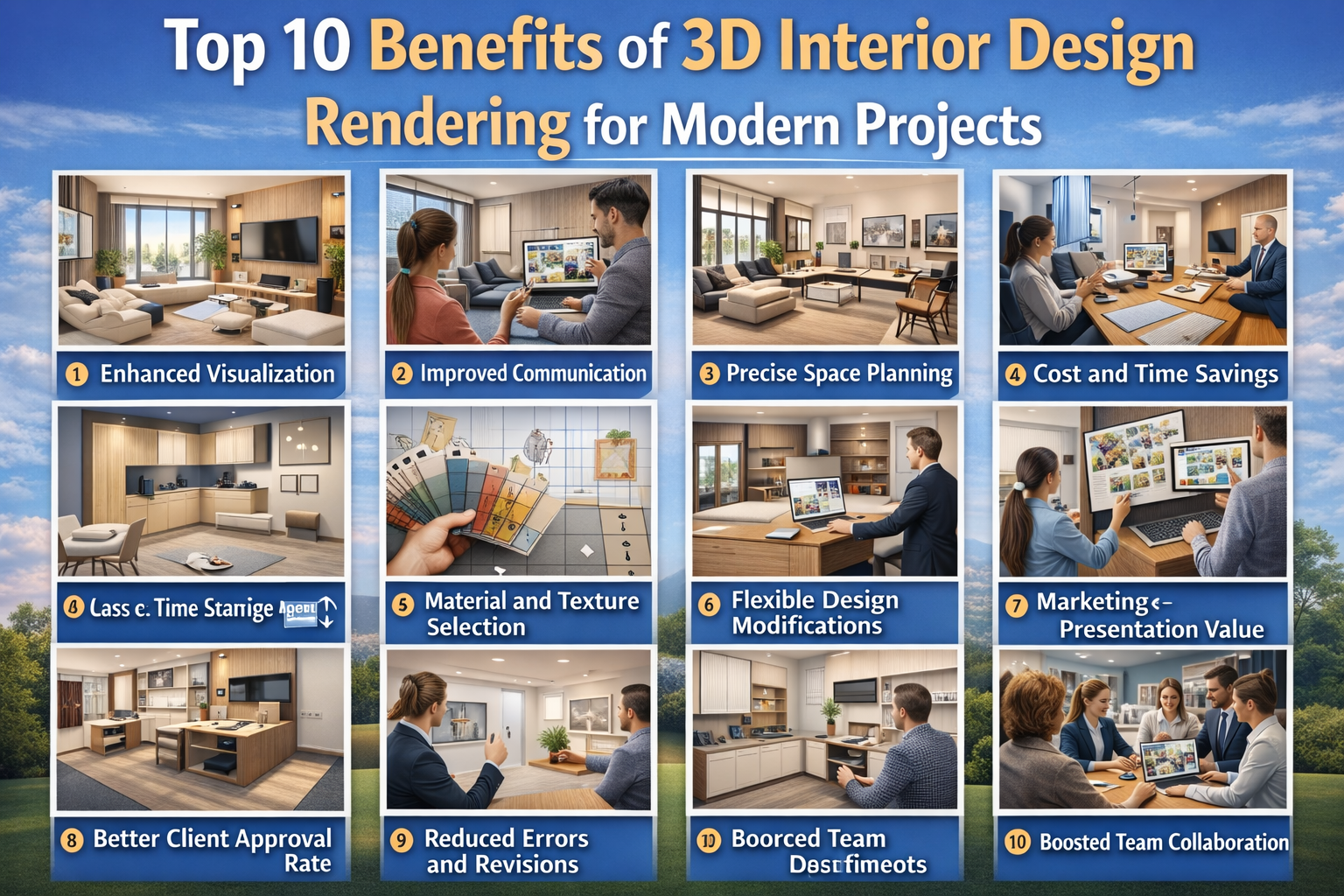
Top 10 Benefits of 3D Interior Design Rendering for Modern Projects
3D interior design rendering has revolutionized how we approach modern design by providing an ultra-realistic visual representation well before the actual work begins. A visual representation that includes realistic light, texture, and spatial relationships enables faster design decisions for both the designer and the client. Rendering generates a better-flowing design process that improves communication and ensures that every detail is correct. Whether residential, commercial, or hospitality spaces, 3D interior design rendering provides unmatched accuracy, performance, and efficiency throughout the design journey.
The Primary Benefits of Photorealistic Interior Rendering for Designers and Clients:
- Easier for clients to visualize the immediate space using photorealistic interior rendering.
- Clarity for designers and communication improvements due to its 3D rendering capabilities
Photorealistic interior rendering provides clients with complete visual clarity, while designers can communicate those ideas in a more accurate and timely manner. Improved visual clarity reduces project misunderstandings and builds confidence in design choices. Consequently, architects and studios desire and rely on the advanced rendering capabilities for adamantly summarized workflows and realistic presentations.
1. Improves Client Communication and Insight
Three-dimensional interior visualization can minimize that bridge between what they are envisioning and what is tangible. Clients can view a very realistic version of the layout, textures, and accessories before the work process even begins, minimizing potential for differing perspectives or levels of satisfaction. This level of clarity allows for quicker approvals and easier communication at each stage.
2. Speeds Up Decision-Making with Realistic Options
Instead of using mood boards and 2D sketches, clients can quickly evaluate a number of design variations, including color palettes, light placement, and selections of furniture for each variant. This makes decision-making far quicker and, more importantly, confident and distinct.
3. Highlights Design Flaws Early in the Business
The 3D visualization process helps highlight possible spatial conflicts, inappropriate proportions and awkward configurations early in the process, before the build or install happens. Discovering problems early in the process saves designers time, revisions and minimizes wasting money doing re-work while going through the execution.
4. Improves Marketing and Presentation Quality
High-quality 3D interior design rendering serves as a powerful marketing tool. Designers, architects, and studios use these visuals for brochures, websites, portfolios, and social media campaigns. Photorealistic renders elevate a brand’s image and attract more clients with striking visuals.
5. Reduces Project Costs Through Precise Planning
3D rendering avoids material wastage and incorrect purchases by giving accurate previews of textures, finishes, and dimensions. Clients can approve materials and layouts beforehand, ensuring fewer onsite changes and major cost savings.
6. Offers Realistic Lighting and Material Simulation
Artificial and natural lighting scenarios can be visualized in real time through advanced 3D tools. This helps clients understand how materials will look in various settings, improving design accuracy and helping them choose the right finishes effortlessly.
7. Facilitates Smooth Collaboration Between Teams
3D interior rendering improves teamwork among architects, designers, engineers, and contractors. Everyone gets a clear idea of the final outcome, simplifying coordination and reducing errors during construction or installation.
8. Makes Remote Design Presentations Seamless
Virtual walkthroughs and interactive 3D models enable designers to present ideas to clients anywhere in the world. This remote-friendly approach saves time, speeds up feedback, and supports international design projects seamlessly.
9. Enhances Customization for Unique Client Preferences
Every client has unique tastes, which 3D interior design rendering addresses effectively. Designers can create personalized layouts, furniture options, and décor styles that match the client’s exact preferences before execution.
10. Builds Trust and Increases Client Satisfaction
When clients see realistic, high-quality visuals of their future space, it boosts trust and satisfaction. This transparency results in stronger client-designer relationships, repeat business, and positive referrals.
FAQs
- What does rendering a 3D interior design mean?
Rendering a 3D interior design refers to creating photo-realistic images of an interior space by way of a virtual model created in 3D modeling software. This provides clients with the most realistic picture of what their final product looks like before they commence construction.
- How does visualization of 3D interiors help designers?
Visualization gives designers increased accurate information that simplifies the approval process in addition to cutting down revisions, while providing the flexibility to explore multiple 3D design concepts.
- What software is used for 3D interior rendering?
Some of the more well-known rendering tools include 3ds Max, Blender, SketchUp, Vray, Corona Render and Lumion.
- Are the 3D renders realistic enough to select materials?
Yes, modern rendering engines use a sophisticated algorithm that simulates light, texture, and or material to provide a near photo realistic product for material selection that a designer can put confidence behind, making a design decision nearly reservation-free.
- How long will it take to create a 3D interior render?
Depending on the complexity, a render may take anywhere from a few hours to a couple of days to produce.
