Our Blogs
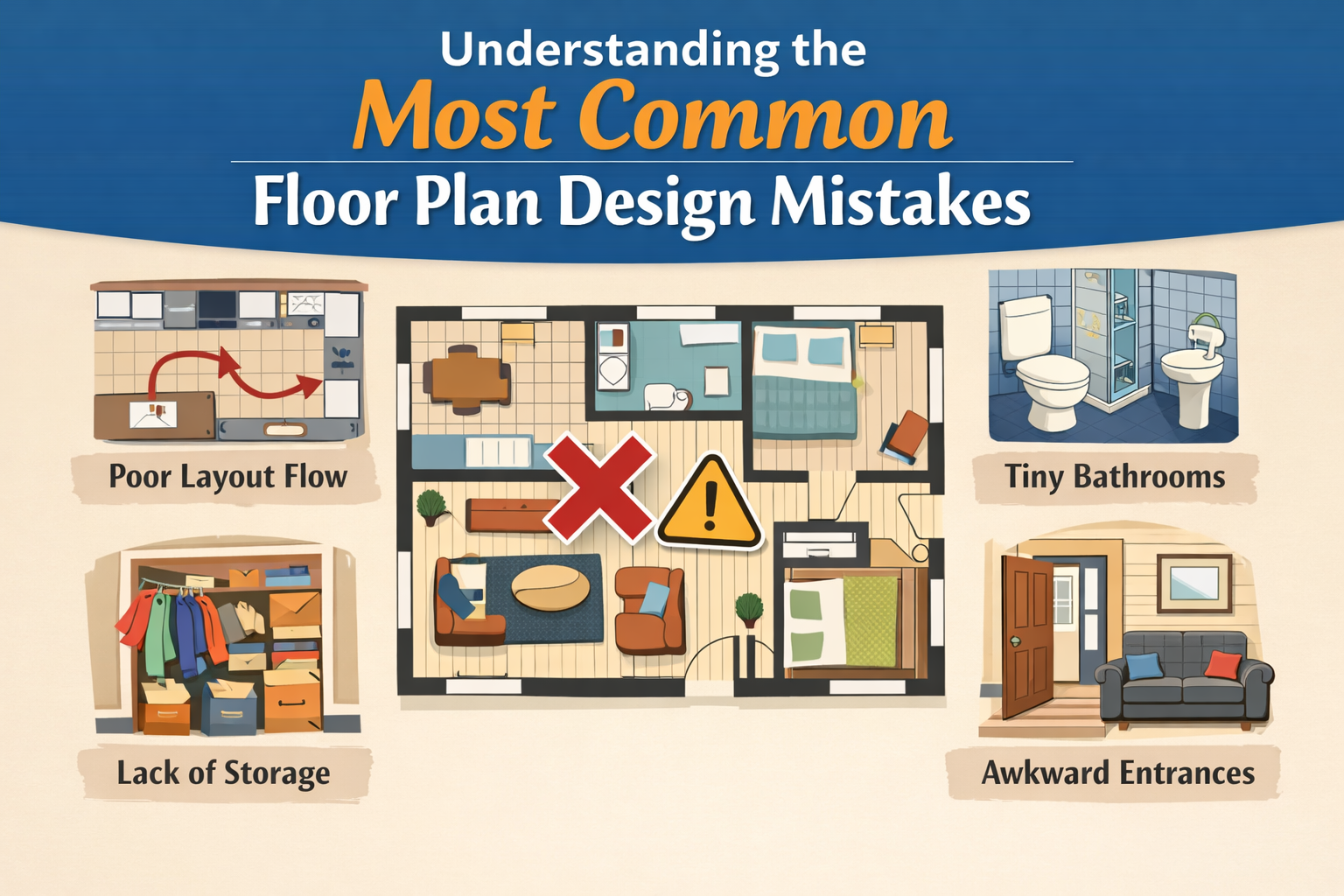
Understanding the Most Common Floor Plan Design Mistakes
The floor plan is the foundation of all architectural and interior design projects. It illustrates how spaces connect, how spaces function, and how spaces flow. Yet, a minor mistake in the design will cause day-to-day discomfort and lasting discontent. Indeed, many homeowners, architects, and designers are making floor plan design mistakes that are completely avoidable, which lead to the fundamentally wrong relationship between comfort, aesthetics, and functionality. By recognizing these mistakes early and fixing them, your living space can be a functional space, an adaptable space, and a comfortable space to see every day that looks and feels good.
Not Considering the Connection Functionality Flow – Common Floor Plan Mistakes
- Poor connections between spaces
- Uncomfortable entries and narrow hallways.
- Ineffective access to spaces that should be used routinely.
A useful, easy layout is vital for the space to have a free flowing comfortable living space. The design flaw that occurs most often around the world, however, is designing a space without optimizing the daily functional flow. Consider the kitchen being isolated from the dining space in the main level design layout, or placing your laundry closet far from your menu and welcome center space. These daily life spaces matter as we are human and have tight spaces of our own, and do not have the luxury of leisurely flow or movement. Ultimately, all flow and entries through different areas in the same space are seen as a position, no matter how you define it, but a balance to be achieved.
Overlooking Natural Light and Ventilation – Architectural Floor Plan Tips
- Blocking natural light sources
- Ignoring window orientation
- Failing to design for cross-ventilation
Natural light and airflow are critical elements of any successful design. A poorly lit home feels dull and cramped, while one with good sunlight and air circulation feels warm and welcoming. Among the key architectural floor plan tips, one stands out, designed with light in mind. Position windows to capture maximum sunlight during the day, and ensure every major room has access to fresh air. This not only saves on energy bills but also enhances comfort and well-being.
Focusing Too Much on Aesthetics: Best Practices in Floor Planning
- Prioritizing décor over practicality
- Designing spaces that look good but lack usability
- Choosing layouts that don’t support daily routines
Aesthetics are important, but functionality should always come first. Overemphasizing visual appeal can lead to layouts that look impressive but feel inconvenient. The best practices in floor planning recommend starting with purpose-driven design, identifying how each room will be used, then building aesthetics around function. For example, an open kitchen-living layout might look trendy but can cause noise and smell issues if not properly zoned.
Skipping Storage Spaces – Home Layout Design Mistakes
| Area | Common Mistake | Better Solution |
| Bedroom | No built-in closets | Include full-height wardrobes |
| Kitchen | Limited cabinet space | Add overhead and under-counter units |
| Entryway | Cluttered look | Integrate concealed storage |
| Bathroom | Insufficient shelving | Add niches or vertical shelves |
Lack of storage is among the most frequent home layout design mistakes. It might seem minor during the planning stage, but poor storage design leads to cluttered, disorganized homes later. Integrating storage solutions like built-in wardrobes, vertical shelving, and concealed cabinets ensures every inch of space is functional and tidy. Smart storage adds convenience without compromising aesthetics.
Misjudging Room Proportions – Common Floor Plan Errors
- Oversized living areas with unused corners
- Tiny bathrooms or kitchens that feel cramped
- Unbalanced room sizes throughout the home
Another typical floor plan design mistake is poor room proportioning. Spaces should be designed with their purpose in mind. For example, a guest bedroom doesn’t need the same size as a master suite, and a kitchen must have enough workspace for comfort. Always use accurate measurements and scale drawings to ensure proportional balance. Properly sized rooms create harmony and improve both visual and practical appeal.
Ignoring Future Family Needs
A design that only suits your current lifestyle can quickly become obsolete. Future-proofing your home is crucial. Whether it’s planning for an extra bedroom, a home office, or an elder-friendly layout, flexibility ensures your home adapts over time. A forward-thinking design saves renovation costs and adds long-term value.
Neglecting Privacy Between Spaces
Open layouts are popular but can lead to noise and privacy issues. Bedrooms, bathrooms, and study areas should be positioned away from busy spaces like living rooms or kitchens. The right zoning strategy provides quiet, comfort, and personal space for each family member without compromising the openness of the design.
Forgetting Electrical and Plumbing Layouts
A common yet costly oversight is ignoring electrical and plumbing details during planning. Misaligned wiring or plumbing can cause expensive modifications later. Ensure electrical points, lighting fixtures, and plumbing lines are finalized alongside the floor plan. Align sockets with furniture layouts for convenience and avoid last-minute disruptions.
Not Consulting Professionals Early
DIY planning or skipping professional consultation can lead to expensive design flaws. Architects and interior designers provide expertise in spatial planning, compliance, and functionality. Consulting professionals early ensures that your layout adheres to safety standards, maximizes efficiency, and prevents avoidable mistakes during construction.
Misalignment with Lifestyle and Routine
Each family has unique daily habits, and the floor plan should reflect that. For instance, a family that cooks often should have an open, accessible kitchen layout, while those who entertain guests need spacious living areas. Ignoring lifestyle alignment leads to spaces that feel restrictive. Design with your routine in mind to achieve the perfect balance between beauty and purpose.
Conclusion
A well-designed floor plan is a thoughtful balance of aesthetics, function, and flexibility. Avoiding these floor plan design mistakes—from ignoring natural light to overlooking storage can make all the difference in comfort and livability. By following best practices in floor planning, consulting professionals, and considering future needs, you can design a space that not only looks beautiful but works effortlessly for years to come.
Frequently Asked Questions (FAQs)
Q1: What are the most frequent design mistakes made on floor plans for homes?
Ans: Floor plan design mistakes most often include: not considering the flow of space from room to room, lack of natural, adequate lighting, insufficient or no storage space, improper proportions in fittings or materials, and lack of expected privacy in the layout.
Q2: How do I improve the flow of a floor plan?
Ans: Make sure that important spaces like kitchens or living rooms are easily accessible. Keep pathways clear and place rooms according to the indicated function and use.
Q3: Why is natural lighting so important in floor plan building?
Ans: Natural light makes spaces feel more comfortable, uses less energy, and makes the space feel open and inviting. And window orientation is important for having natural light fill a space or not.
Q4: What is the best way to avoid mistakes when designing the layout of your home?
Ans: Plan some dedicated space for storage; call your designer early so swap ideas; consider aspects of your layout that match your current lifestyle and consider those and then how you think your needs will change in the future.
Q5: Can I fix the mistakes of the floor plan once I begin construction?
Ans: Minor things like the furniture orientations, but things that are related more functionally can perhaps be changed, but may be more complicated.
